Lake Forest Park / WA

Knob and Tube Wiring Replacement in Lake Forest Park, WA

Shoreline Knob and Tube replaces knob-and-tube wiring in Lake Forest Park, WA, along with the ungrounded cloth-covered cable found in many of the city’s postwar houses. We identify which system a home has, replace active circuits with grounded wiring, remove abandoned runs we can reach, and plan access through plaster and finished walls.

Lake Forest Park has a larger share of older homes than its neighbors. Census estimates place about 16.8% of its roughly 5,500 homes before 1950, and around 640 before 1940, so knob and tube is more likely to turn up here than in Shoreline, Kenmore or Edmonds, though it is still found in only a minority of houses.

Request a quote
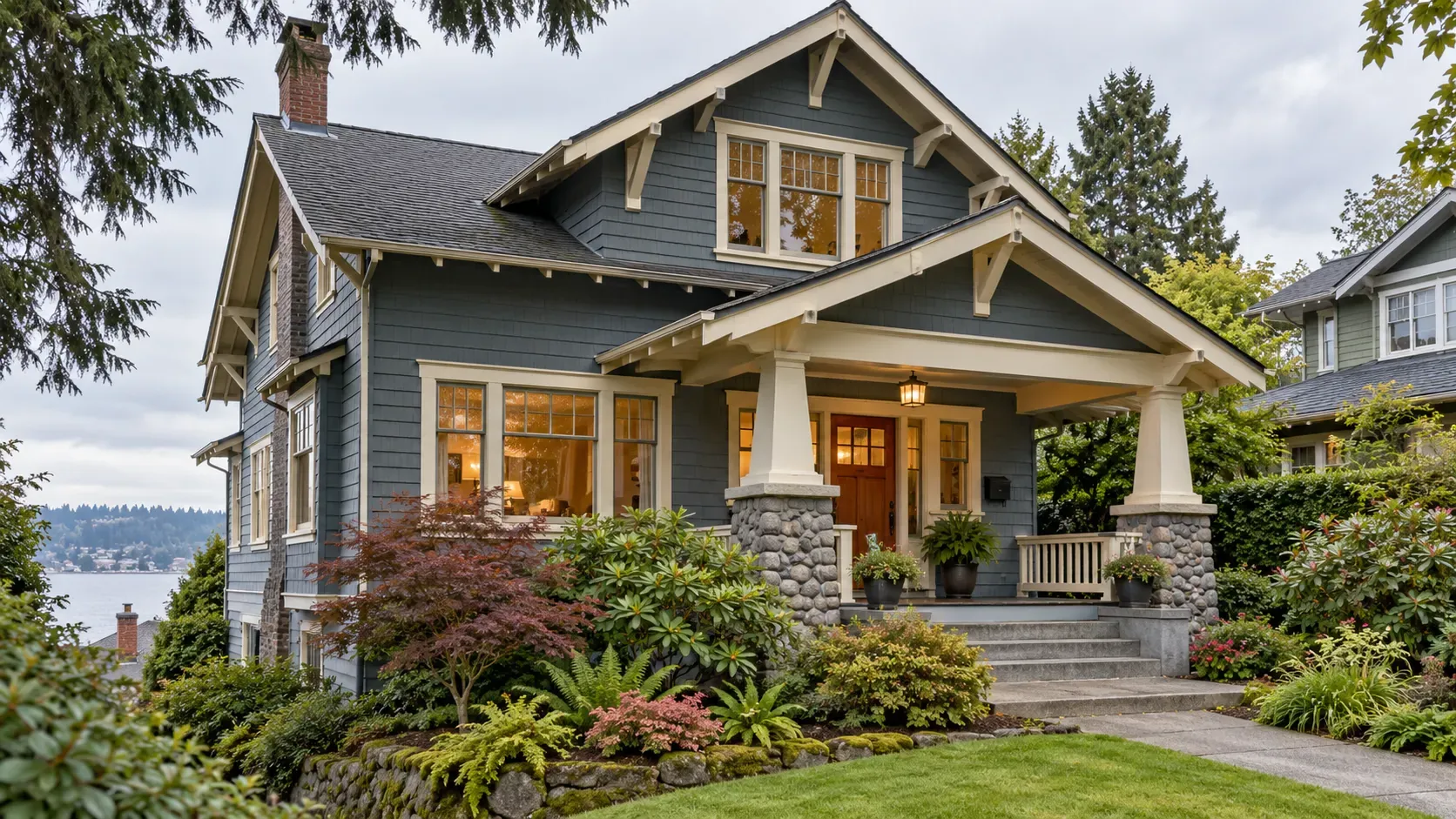
Gray older house with a covered front porch, stone porch piers and a planted front garden

Knob and tube wiring replacement options in Lake Forest Park

Knob-and-tube replacement in older homes

Houses built before 1940, some on streets laid out in the original 1912 plat, are where knob and tube is likeliest. We find out whether those circuits are still live, where they have been extended or spliced, and what they feed, then replace the active runs with grounded cable and pull out dead wire where the attic or crawlspace allows. Our homepage explains how we approach knob and tube across the Shoreline area.

Cloth and ungrounded circuits in 1950s-60s homes

About 2,000 Lake Forest Park homes date from the 1950s and 1960s. Those built before the early 1960s were usually wired with braided cable that has no ground, and two-prong outlets are the giveaway. Some of those circuits can take GFCI protection with the right labels; others are better replaced, especially in kitchens and bathrooms. Our cloth wiring replacement page explains how that choice is made.

Access through plaster and finished walls

Homes from before the 1950s were generally finished in plaster, and later remodels can leave plaster and drywall side by side in the same house. We plan routes from attics, crawlspaces and basements first and keep wall openings small and few, with patching responsibility agreed before work starts. Our plaster wall rewiring page describes the routes and the patching options.

Old wiring flagged during a sale

When an inspection report on a Lake Forest Park house mentions knob and tube, we can confirm which circuits are live and provide a written scope for buyer and seller to work from. Our page on knob and tube found in a home inspection covers both sides of the transaction, including permit history and the state disclosure form.

Planning a rewire in Lake Forest Park

A 1912 planned community with homes from many decades

Lake Forest Park began in 1912 as Ole Hanson’s planned residential community, one of the first in the Seattle area, but it grew slowly: it stayed under 5,000 residents until annexations in the 1990s and did not incorporate until 1961. Its housing reflects that pace. Census estimates count roughly 920 homes from before 1950, about 990 from the 1950s, 1,000 from the 1960s and another 1,000 from the 1970s, plus some 1,500 built since 1980. The tract around Sheridan Beach has one of the highest pre-1950 shares in the area, at about 27%. Two houses on the same street can hold entirely different wiring, so each one is surveyed on its own merits rather than assumed from the house next door.

Electrical permits through L&I

Lake Forest Park is not among the Washington cities that run their own electrical permit programs, so permits and inspections for addresses in the city come from L&I, just as they do in Shoreline. The contractor performing the work buys the permit before starting, and the new wiring is inspected before walls and ceilings are closed. L&I advises confirming the jurisdiction for each address before a permit is bought, to avoid delays and refund processing fees if a property turns out to fall under another program.

What a survey checks in an older Lake Forest Park house

Because a larger share of Lake Forest Park houses predates 1940 than in the surrounding cities, two older details come up often enough here to check before any scope is written.

Fuses and the circuits they protect

Houses wired before the 1940s were built with screw-in plug fuses. The original Edison-base type accepts any fuse up to 30 amps, so a small knob-and-tube conductor can end up behind a fuse far larger than it should carry; tamper-resistant Type S fuses, sized so they can’t be swapped upward, became mandatory for new installations from late 1941. Matching each fuse or breaker to the wire it protects is basic good practice, and if insulation is ever added around the old wiring, Washington’s rule makes breakers or Type S fuses sized for the wire a condition. The survey records what each old circuit is actually fused at.

Insulation added over old wiring

Many older attics were insulated decades after the wiring went in. Underwriters Laboratories’ history of residential wiring points out that loose-fill cellulose blown over knob and tube in the 1970s created an ignition risk at splices that had failed. Where an attic or wall cavity already has insulation around live knob and tube, we note it, because it changes both the urgency of replacement and how the wiring can be reached.

Agree what replacement and removal include

“Knob and tube removal” can mean different things, so the written scope should separate them. Replacing active circuits means running new grounded cable from the panel to each outlet, switch and light the old wiring served, after which the old conductors are disconnected. Removing abandoned wire is extra work: runs in an open attic or crawlspace can usually be pulled out, while dead wire inside closed plaster walls is often left disconnected in place rather than torn out.

The scope should also say how many openings are expected and who patches them, whether the panel needs changes for the new circuits, and what records you will receive at the end: the L&I permit number, the inspection result and a list of the circuits replaced. Those papers are what a future buyer or insurer is likely to ask about.

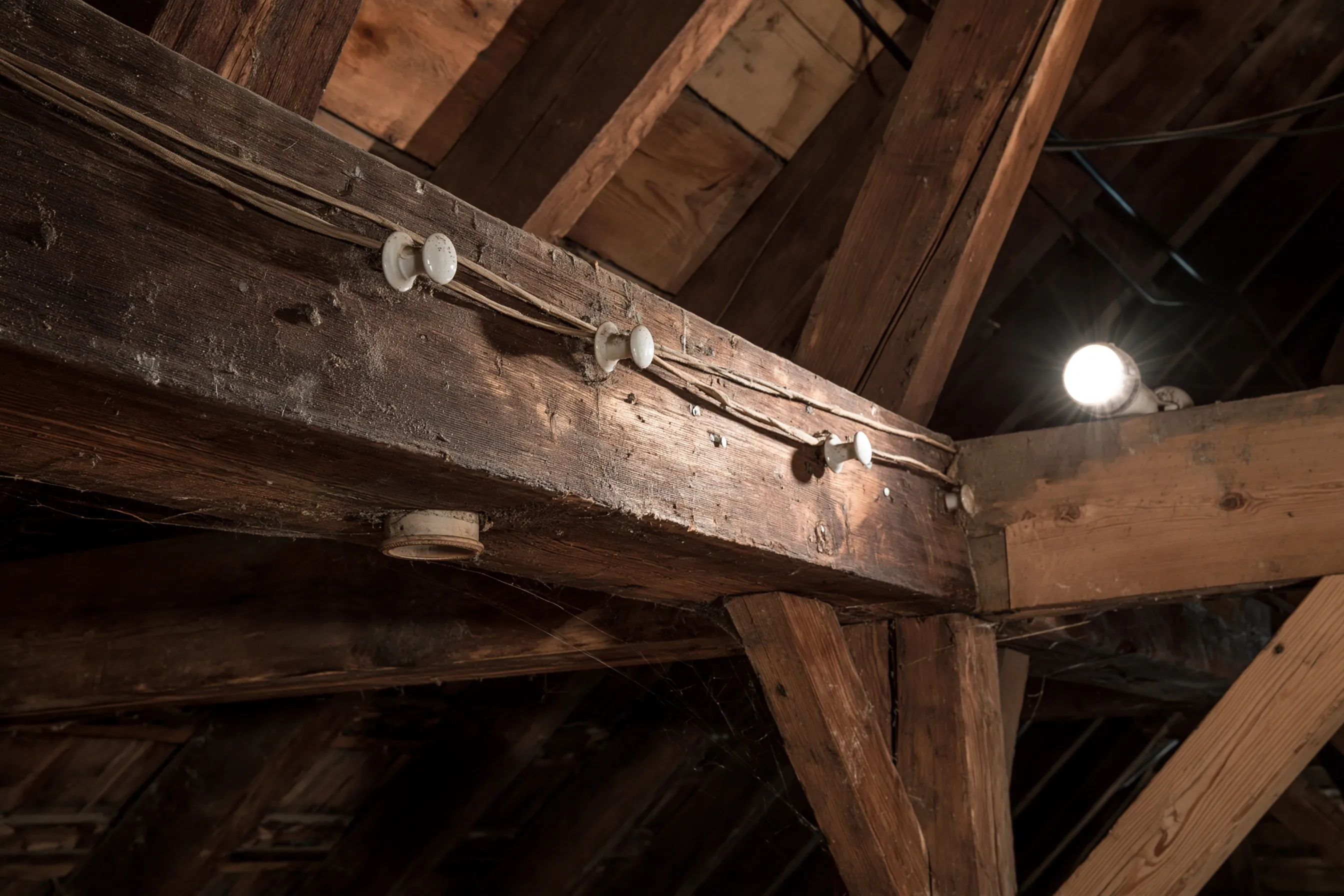
Old attic beam with original knob-and-tube wiring: cloth-covered wires held on white porcelain knobs along the timber

Frequently asked questions

Is knob and tube common in Lake Forest Park?

Somewhat more than nearby, since about 640 of the city’s homes, or one in nine, date from before 1940, when knob and tube was still being installed. That still leaves most Lake Forest Park houses newer than the system, and some older ones have had their wiring replaced already. A look at the attic, the crawlspace and the panel settles it for a particular house.

Does knob and tube have to be replaced before a house is sold or insulated?

No Washington rule we know of requires replacement before a sale; the seller disclosure form asks about electrical defects in general terms. Insulation is different: it can only go around existing knob and tube under the survey and certification conditions in WAC 296-46B-394, which is one reason to replace the live circuits first.

Who issues electrical permits in Lake Forest Park?

The state does. Lake Forest Park has no electrical program of its own, so L&I sells the permit and sends the inspector for houses inside city limits. Because a mailing address and a city boundary do not always agree, L&I suggests checking the jurisdiction of the exact property first.

Can insulation go over knob and tube?

Washington permits it with conditions, listed in WAC 296-46B-394. The old wiring first has to be looked over by a licensed electrical contractor, who then vouches for its condition to L&I in writing; only Class I insulation qualifies, foam is excluded, and each circuit must sit behind a breaker or Type S fuse rated for its wire. Alternatively, the live knob and tube can be replaced before any insulation goes in.

Across the county line, our Edmonds knob and tube page covers the city’s few hundred pre-1940 houses and its large stock of 1950s and 1960s homes.

Your next step

Request knob and tube wiring replacement in Lake Forest Park, WA

Lake Forest Park houses vary a lot, so a line on when yours was built, whether it has been added onto, and what the attic or crawlspace looks like helps us prepare. We'll get back to you soon with an estimate or any questions we have. Estimates are free and there's no obligation.

Call (425) 725-5719

Call (425) 725-5719